

A Private Shiga Day Tour for Small Groups: Chikubushima, Matcha, Pottery, and Omi Beef
For couples, friends, or small family groups planning a day in Shiga, HYART offers private itineraries that combine some of the region's most distinctive experiences: a ferry crossing to Chikubushima Island on Lake Biwa, matcha tasting, Shigaraki pottery, and Omi beef dinner. The starting point is Hamaotsu (hotel pickup) at 8:30, returning by approximately 20:30 — a full day by private vehicle, with a multilingual coordinator present throughout. Which combination of experiences suits your group depends on how many people are travelling, the time of year, and what kind of day you want.
Why Shiga Works Well for Small-Group Private Travel
Shiga attracts small private groups in part because it offers a different register of travel from Kyoto and Osaka. Visitor density is lower, the pace is less pressured, and the combination of lake scenery, traditional craft towns, and historic temples creates an itinerary that doesn't feel like a checklist. Sites like Chikubushima Island, the metasequoia avenue at Makino Highland, and Shirahige Shrine's lake torii are visually distinctive and personal in a way that doesn't require crowds to appreciate. The Omi beef dinner at Matsukiya — included in all HYART one-day courses — is a natural endpoint for a well-paced day.
Chikubushima Island Cruise and Lake Biwa Photo Spots
Chikubushima is a small island in northern Lake Biwa, home to Hogon-ji Temple (a National Treasure gate and Benzaiten hall) and Tsukubusuma Shrine, one of Japan's three major Benzaiten shrines. The ferry from Imazu Port takes approximately 30 minutes each way, and the approach across the lake — with the island rising from the water — is an experience in itself. On the island, you can try kawarake throwing: writing a wish on a clay tile and tossing it through a small torii gate. Along the lake road en route, the coordinator can stop for photographs at key spots — Shirahige Shrine's water torii is particularly striking in morning light, and Makino Highland's metasequoia avenue (approximately 2.4 km, more than 500 trees) is a popular stop for small groups.
Matcha Tasting and Zazen: Japanese Cultural Experiences at Your Own Pace
The matcha tasting experience uses tea leaves from Asami (Koka City, Shiga) and Wazuka (Kyoto Prefecture) — two of Japan's oldest tea-growing areas. Unlike a formal tea ceremony observation, the focus is on preparing matcha at your own pace and to your own preferred strength. The process itself, and the contrast between different teas, makes for an engaging hands-on session. At Enryakuji Temple on Mount Hiei, a guided zazen session with a resident priest can be incorporated — combined with a dharma talk and shojin ryori (Buddhist vegetarian lunch) at the temple hall. Matcha tasting is available as part of the Shigaraki pottery course (in the Koka/Shigaraki area), while zazen is part of the Enryakuji course. Both can be incorporated into a longer stay if you have multiple days.
Hands-On Japan: Shigaraki Pottery and Food Sample Craft
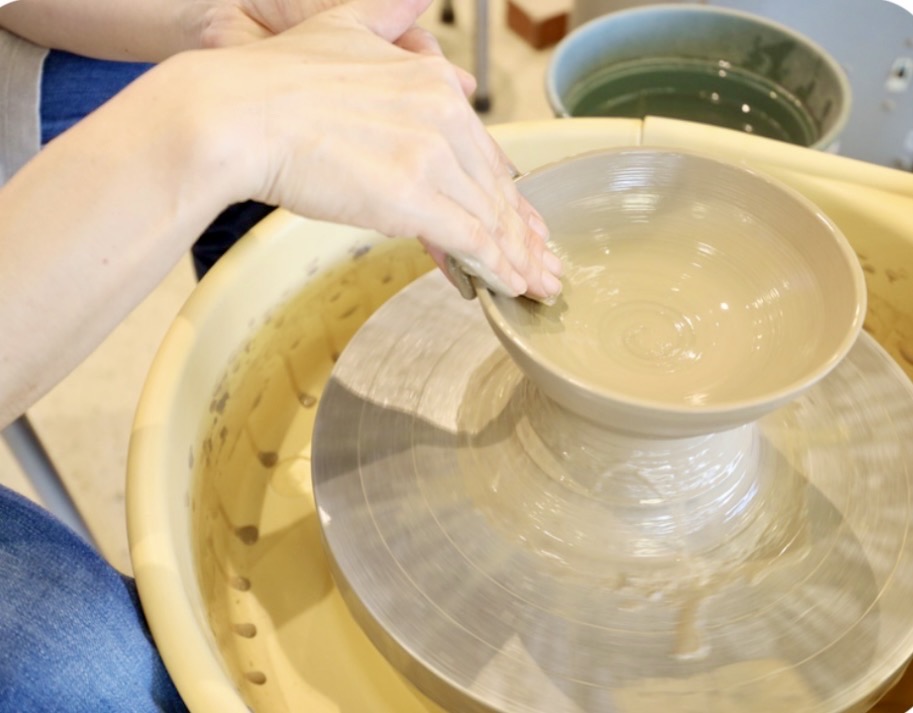
Shigaraki ware is one of Japan's Six Ancient Kilns, with a ceramic tradition going back more than 1,200 years. The experience at a Shigaraki studio includes wheel-throwing under the guidance of a local master — working with the characteristic rough clay that gives Shigaraki ceramics their texture — with international shipping of the completed piece available to discuss separately. Food sample making at Cotocoto+ in Sanjo, Kyoto, takes a different approach: working with artisans to create highly realistic replica dishes — the kind displayed in Japanese restaurant windows — and taking the finished piece home. Both experiences appeal to groups who value making something with their hands over passive sightseeing, and work well as the centrepiece of a day's itinerary.
What Private Tour Format Provides for Small Groups
HYART's private tours mean your group travels exclusively with each other — no shared coaches, no timetables set by other people's preferences. Time at each site is your own: stop for photographs, linger at a temple, or skip a stop if the group's energy calls for it. The coordinator manages all logistics and communication throughout, so language is not a factor at restaurants, shrines, or studios. If weather changes mid-day, the itinerary can be adjusted — outdoor experiences like Chikubushima can be switched to indoor alternatives such as pottery or matcha if conditions change. For those interested in combining sightseeing with beauty medical coordination in Japan, HYART can discuss that as part of a broader itinerary — a service not typically available through conventional travel agencies. That said, HYART does not accommodate large general tour groups. For an overview of all six model courses, see HYART Shiga One-Day Private Tour: 6 Model Courses. For local Shiga spots beyond the standard tourist circuit, see What a Local Guide Shows You in Shiga.
Combining Experiences Across One Day or Multiple Days
Chikubushima cruise, matcha tasting, Shigaraki pottery, zazen, and food sample making each belong to different model course itineraries. Choosing one experience as the centrepiece of a single day is the most common approach; combining multiple experiences over two nights or more is also possible and worth discussing. The right combination depends on your group's size, the season, and which aspects of Japan you most want to engage with. If you are unsure which course or combination fits best, that is the right question to bring to an initial inquiry.
To discuss what a tailor-made Shiga itinerary could look like for your group, speak with our coordinators.